
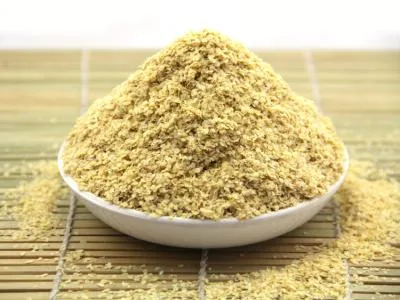
Wheat germ, also called germ powder, is a golden, granular substance. It is one of the organs by which wheat sprouts and grows, making up about 2.5% of the whole grain, and is rich in vitamin E, vitamin B1 and protein — of very high nutritional value. The germ is the source of wheat’s life and the most nutritious part of the grain, containing abundant protein, vitamins, minerals and all 18 amino acids essential to the human body. Wheat germ is extracted from quality wheat by a germ-cutting machine, and is a high-protein, high–vitamin E, low-calorie, low-fat, low-cholesterol nutritional food. Freshly cut wheat germ oxidises very easily; baking releases its nutrients fully, and vacuum packing preserves its original flavour and nutrition. The protein in 50 g of wheat germ is equivalent to that of four eggs, and its vitamin B1 content is about 3.5 times one person’s daily B1 requirement. Wheat germ also contains vitamin E and linoleic acid. A shortage of metals in food affects healthy development — iron deficiency in particular causes anaemia — and wheat germ is an ideal source of trace metals, also rich in vitamin E, B vitamins, octacosanol, plant protein, unsaturated fatty acids and plenty of dietary fibre, and containing abundant minerals such as calcium, iron, zinc and selenium.
The American Dr. Hauser was among the first to propose that wheat germ is a highly nutritious natural food. In his 1951 book on staying young, he wrote that wheat germ contains a rich, balanced set of nutrients essential to growth, and that “half a cup of wheat germ surpasses the protein of four eggs.” By measurement, wheat germ contains about 30% protein — including 18.9% globulin, 0.3–0.37% glutenin and 14% gliadin — making it an important source of plant protein. Wheat-germ protein is high quality: the eight essential amino acids make up 34.74% of its total amino acids, with lysine at 1.85%, and its protein biological value rivals that of the egg, the reference food. Its vitamin B1, vitamin B2, iron and potassium are respectively 3, 8, 4 and 8 times those of an equal amount of flour; it is also rich in zinc. Each 100 g of wheat-germ oil contains 220 micrograms of vitamin E — 13 times that of soybean oil and over four times that of cod-liver oil — making it one of the highest known sources of vitamin E. Wheat germ is therefore an ideal anti-ageing and beauty food.
Wheat germ also contains a sulphur-bearing antioxidant, glutathione, which with the participation of selenium forms an oxidase that catalyses the reduction of organic peroxides and detoxifies chemical carcinogens in the body. It also helps protect the brain and promote infant growth. Its dietary fibre helps lower serum cholesterol and prevent diabetes and colon cancer, and promotes the development of beneficial intestinal flora.
As a natural, nutritious food additive, wheat-germ powder can replace skim milk powder and egg-white components, and is widely used in making bread, biscuits, pastries, noodles, wonton wrappers and other foods, giving a distinctive fragrance. It has broad application in other food processing too — in confectionery, sauces, beverages and more — improving the nutritional value and eating quality of products. Fresh wheat germ can also be made into granules and nutritional powders, an ideal tonic for children and the elderly.
-
Vitamin E — antioxidant, slows ageing, boosts immunity, strengthens cancer prevention and promotes blood circulation; it also promotes skin metabolism for a skin-care, beautifying effect.
-
Choline — forms acetylcholine in the body, with a brain-nourishing effect that may help prevent senile dementia.
-
Octacosanol — improves stamina, increases endurance and eases muscle soreness after exercise.
-
Linoleic acid — lowers the concentration of fats and cholesterol in the blood, prevents arteriosclerosis, helps prevent high blood pressure and diabetes, and can regulate metabolism and boost vitality.
-
Protein — wheat-germ protein contains glutathione peroxidase and a selenium compound that boost immunity, slow ageing and help prevent cancer, and also protect the brain and promote children’s growth.