Research & Development
Product Lab
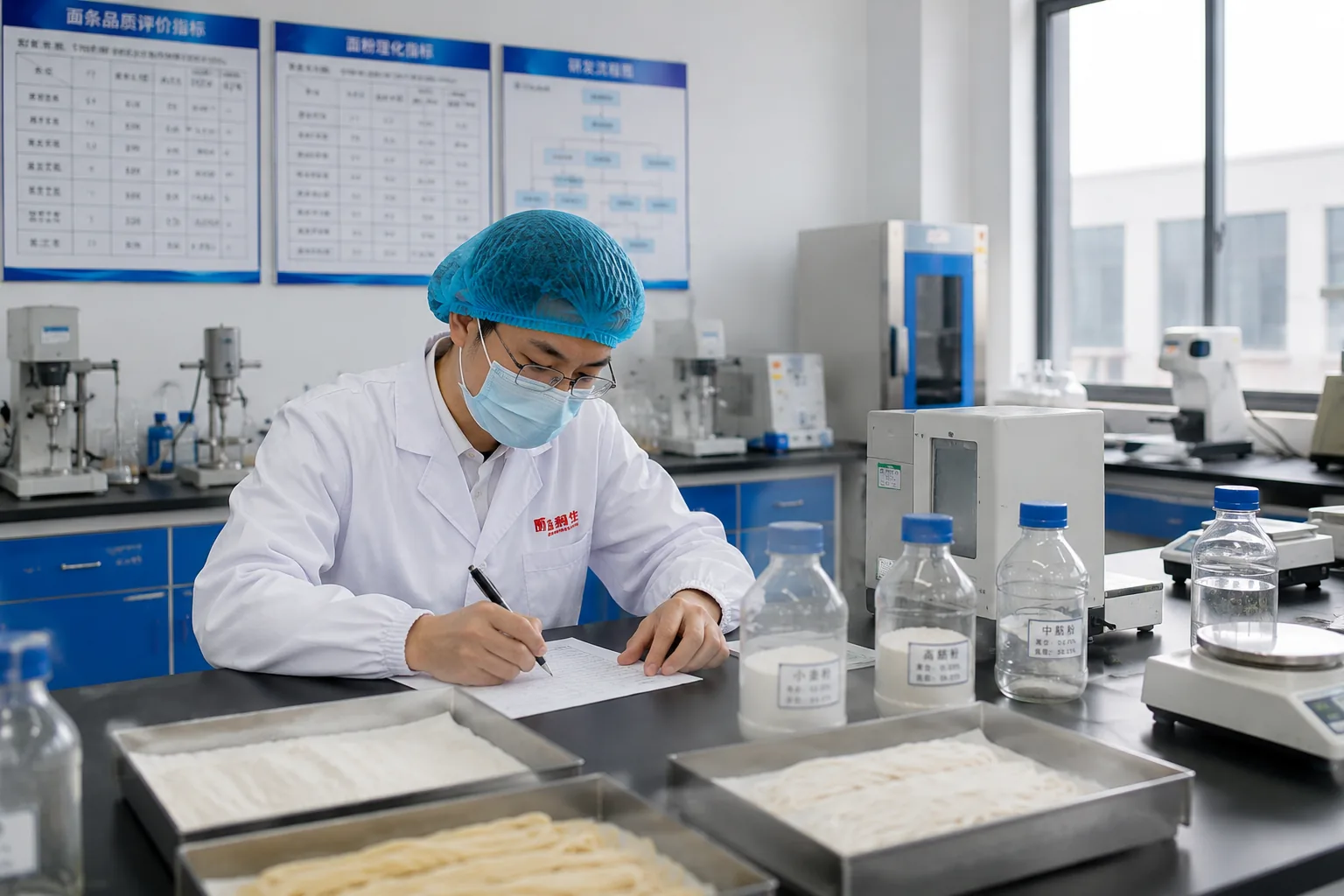
An independent development system covering flour, dried noodles and grain-based foods — from raw material testing to packaging trials.
What the lab does
From raw wheat to a market-ready recipe
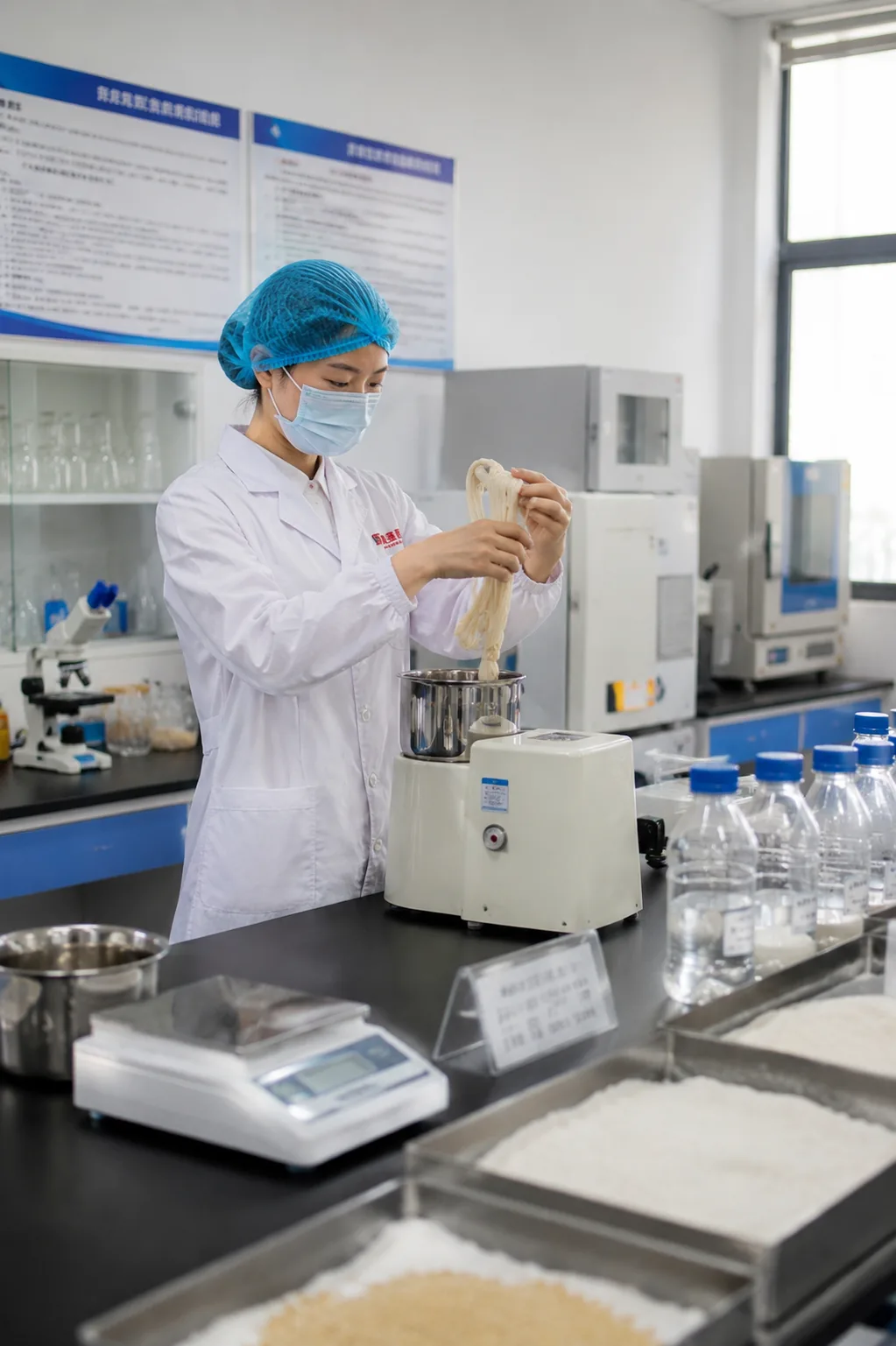
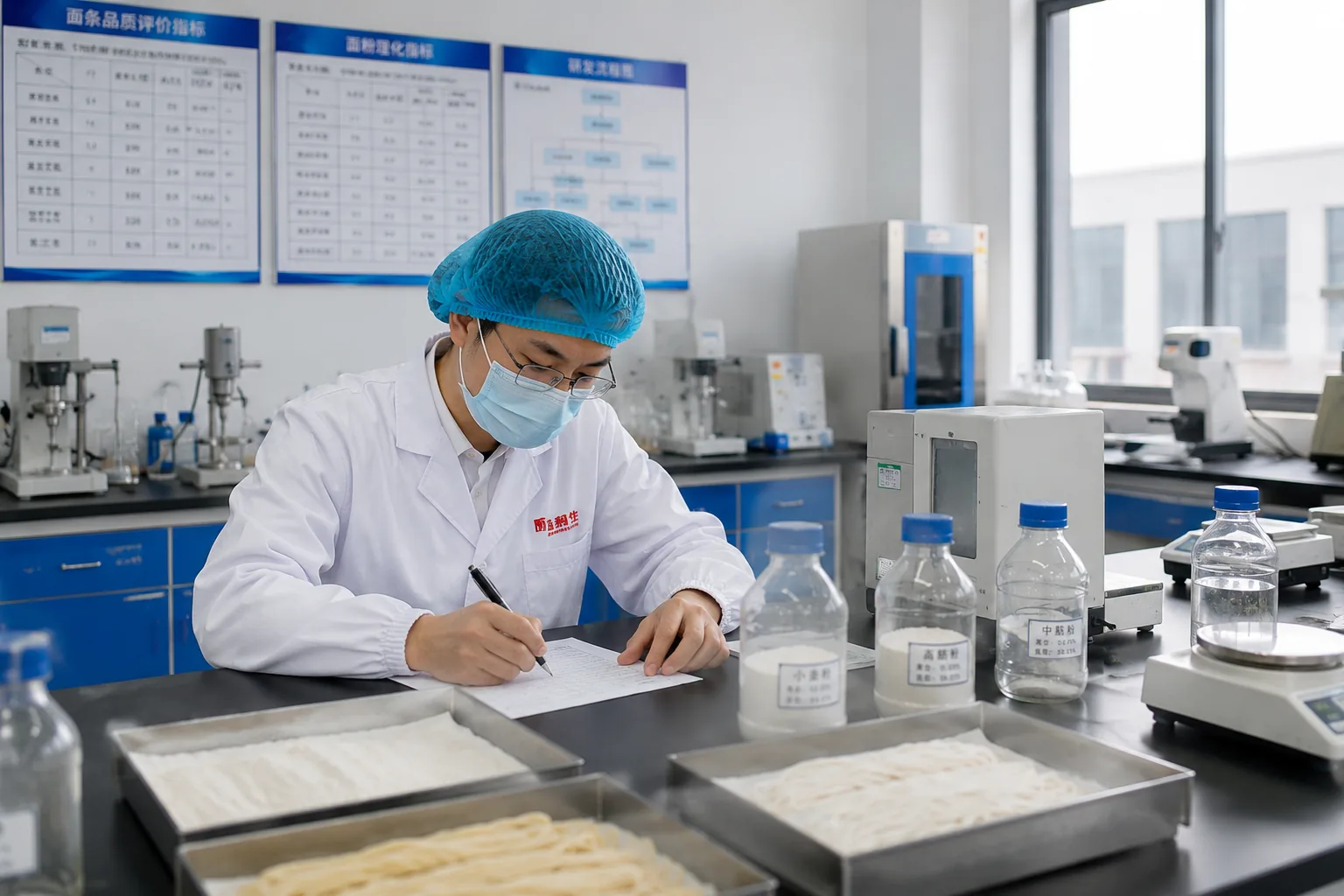
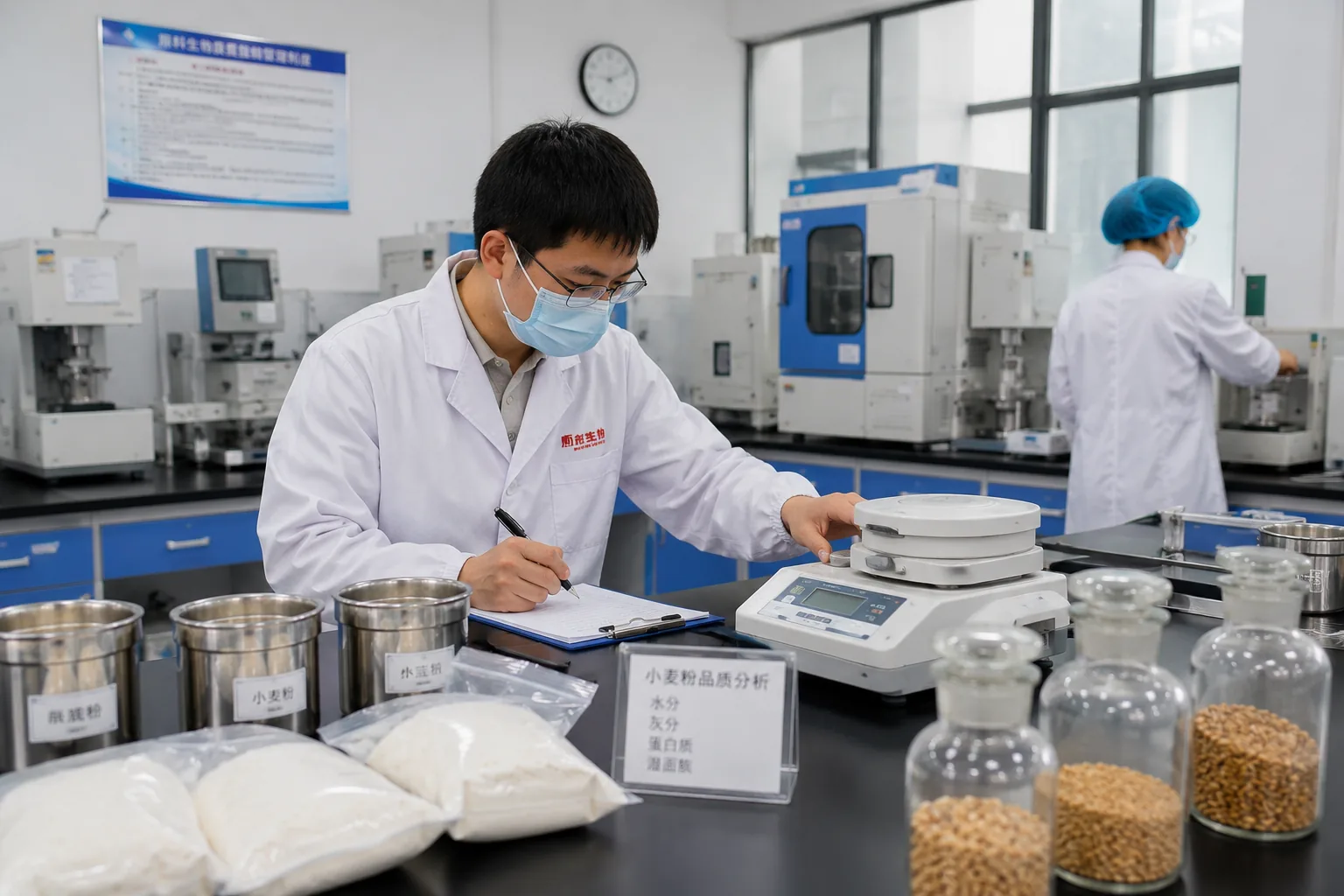
Lisheng's product team works across raw material testing, formula adjustment, noodle texture development and packaging trials. Beyond development, our food-safety lab technicians stay involved at every stage of production — sampling and checking along the line so the whole process stays safe, traceable and firmly under control.
Stage 01
Raw material testing
Every wheat delivery is sampled and profiled on Perten instruments — moisture, protein, wet gluten, falling number and ash. Only grain that meets specification is accepted, and the results decide how each lot is binned by variety and quality.
Stage 02
Pre-processing checks
Before milling, the lab verifies cleaning and tempering (dampening) and signs off the wheat blend — matching the moisture and protein targets of each flour grade. This is the basis of Lisheng's "blend by variety and quality" approach.
Stage 03
Real-time in-process monitoring
Throughout milling and noodle production, flour streams are sampled along the line and checked for ash, whiteness, moisture and granularity. Readings feed back through the MES system so rollers and purifiers can be corrected on the run.
Stage 04
Finished-product inspection
Finished flour and noodles pass physico-chemical, sensory (cooking and texture) and food-safety checks before release. Retained samples and batch records back full traceability under ISO 22000 and HACCP — and the export documentation buyers need.
Develop your product with our lab
Bring a target product or market brief — our team handles formula, texture, packaging and sampling.
Latest product · 2025
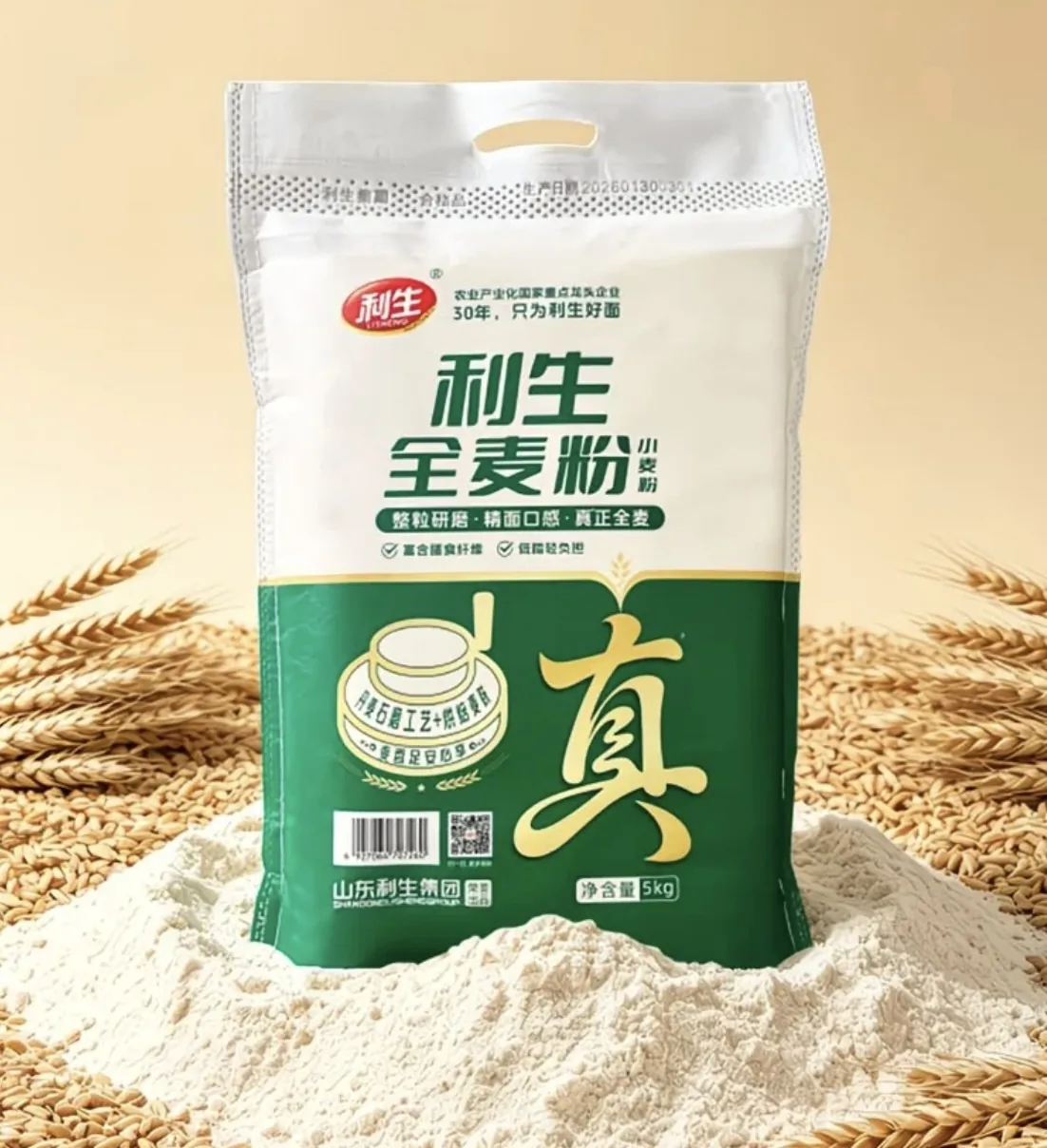
Stone-milled whole grain line
Lisheng runs a dedicated whole grain workshop — an independent building of 1,200 m² across three floors, laid out to modern processing standards. It carries the full in-house chain: raw wheat cleaning, storage and blending, wheat scouring and cleaning, colour sorting, stone milling and flour blending.
Every batch follows one controlled process — clean-wheat handling → sterilisation → wheat colour sorting → cleaning → Danish stone milling → bran baking and blending.
How the process protects nutrition
Low temperature
Low-speed, low-temperature stone milling
A bottom rotating stone disc grinds at low speed while a precise automatic temperature-control system holds the milling temperature within a safe range — a clear advantage for preserving the nutrients in whole wheat flour.
Nutrition kept
Nutrition retention
The same automatic temperature control prevents starch gelatinisation and protein denaturation, so the flour keeps the wheat's natural nutritional profile.
Bran baking
Bran-baking innovation
A high-temperature bran-baking step improves the taste and storage stability of the bran and aids digestion — lifting the overall eating quality of the whole wheat flour.
What's inside whole wheat flour
Whole wheat flour is milled from the entire wheat kernel, keeping all three of its golden components intact.
- Bran
- Rich in dietary fibre, B vitamins and minerals.
- Endosperm
- Provides quality carbohydrates and protein.
- Germ
- Packed with vitamin E, unsaturated fatty acids and antioxidants.
Intellectual property
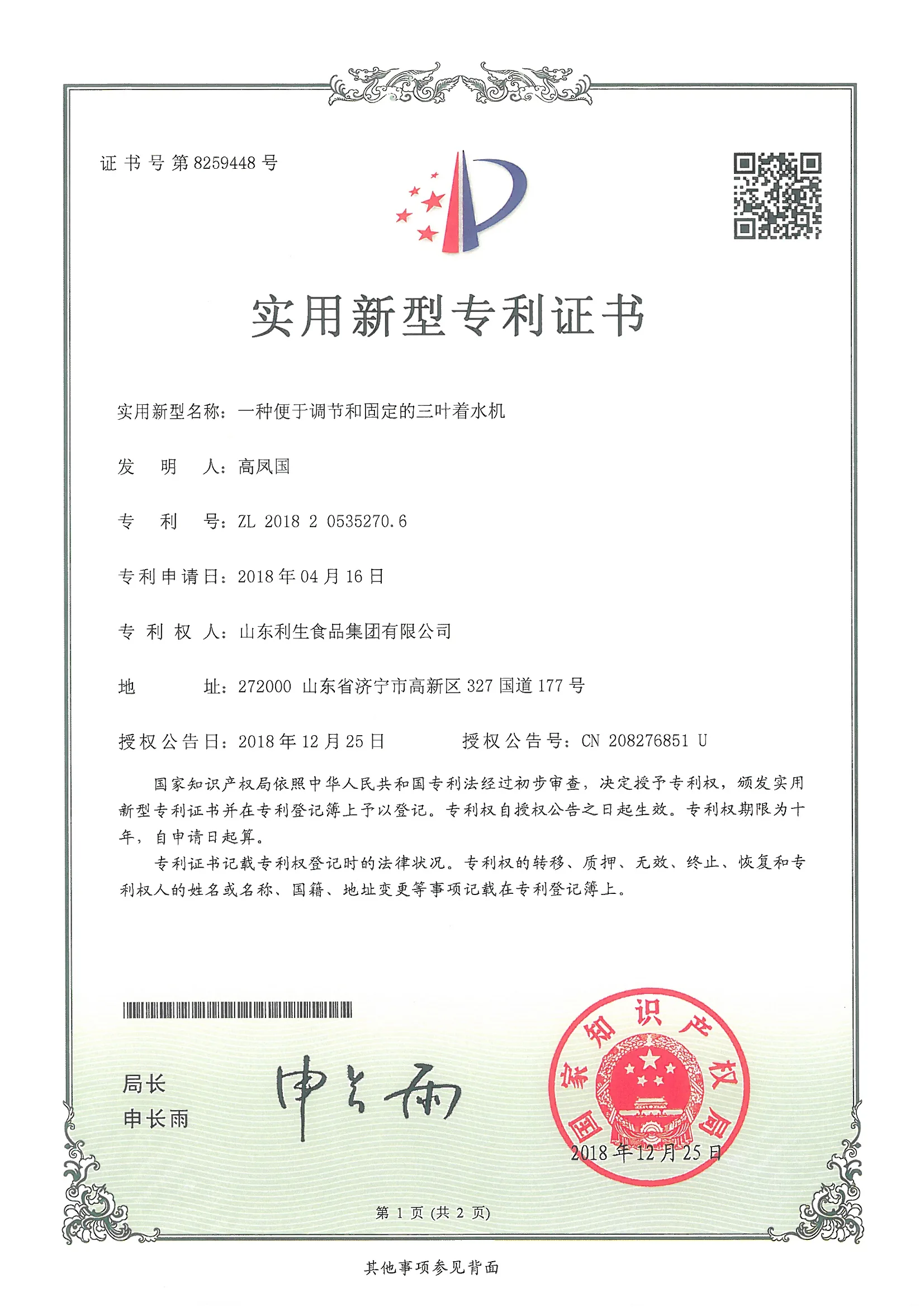
Patented milling & production technology
Lisheng holds a portfolio of national patents on its own milling and flour-production equipment — from wheat dampening, scouring and destoning to sifting, purifying and packing. These in-house innovations improve cleaning efficiency, machine stability and line uptime, underpinning consistent industrial quality. Click any certificate to view the original.