
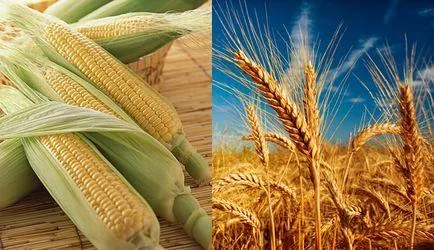
In China, whether wheat can be used in pig feed depends mainly on the ratio of nutritional value to price between wheat and corn. When wheat offers better value than corn, partly or wholly replacing corn with wheat to feed pigs can give good results and economic returns. The following focuses on wheat’s own nutritional characteristics and a comparison with corn.
Wheat and its nutritional characteristics
By planting time, wheat is classed as winter or spring wheat; by skin colour, as red, white or mixed; by grain texture, as hard or soft. Wheat’s chemical composition is greatly affected by variety, soil type and environment. The chemical composition of the grain, especially protein content, varies widely — from a low of 9.9% to a high of 17.6%, mostly between 12% and 14%. Wheat contains many amino acids, with a notably high lysine content. It also contains a certain amount of non-starch polysaccharides, mainly cellulose, pentosans, mixed-linkage glucans, pectic polysaccharides, mannans, arabinans, galactans and xyloglucans. Non-starch polysaccharides fall into soluble and insoluble types: the insoluble fraction is mainly cellulose and lignin, with little effect on nutritional value; the water-soluble fraction is mainly pentosans, regarded as the main anti-nutritional factor in wheat, whose anti-nutritional effect relates mainly to its viscosity and its impact on the digestive tract’s physiology, morphology and microflora. Because of their low water intake, pigs’ digestive juices are relatively viscous compared with other livestock, so using pentosanase to reduce digesta viscosity is less effective. A wheat bulk density of 680–800 g/L does not affect its energy concentration; only below 680 g/L does energy concentration suffer.
Comparing the nutritional value of wheat and corn
-
Wheat has a higher protein content than corn, but its amino-acid balance is slightly poorer, mainly because wheat is higher in non-essential and lower in essential amino acids. For lysine — most likely to be deficient in pig diets — wheat contains 0.3%, 1.25 times corn’s 0.24%. For tryptophan and threonine, also often deficient, wheat contains 0.15% and 0.33% respectively — 2.14 times and 1.1 times corn’s 0.07% and 0.3%. Of these three essential amino acids, the ileal digestibility of two is higher than in corn (threonine being equal).
-
Wheat’s lysine and tryptophan digestibility are 71% and 78%, versus 69% and 67% for corn. Wheat is also higher than corn in all the important mineral elements, especially manganese and zinc.
-
Wheat is higher than corn in calcium and phosphorus, and because it has more phytase, phosphorus availability is also higher.
-
For vitamins, apart from containing no carotene and being lower than corn in vitamin A, wheat is higher than corn in B vitamins, especially niacin.
-
Wheat is lower than corn in crude fat, and far lower in linoleic acid. This is an advantage for finishing pigs, but should be watched for piglets. When corn makes up 50% of the diet, essential fatty acids need not be considered.
-
When replacing corn with wheat, oil must be added to make up for the essential fatty acid shortfall. Using wheat in place of corn can increase the firmness of animal fat and improve pork quality. Wheat digestibility is broadly comparable to corn’s. The nutritional composition of wheat varies greatly by variety and region, which should be noted in use. Treated with enzymes, wheat’s digestibility exceeds that of corn.
(Source: China Animal Husbandry and Veterinary News)